9 Practical Tips to Manage Your Personal Finances
Taking care of personal finances is an essential skill for anyone who seeks peace of mind, security, and financial freedom. The problem is that many people don’t know exactly where their money is going, which makes it difficult to save, build an emergency fund, and start investing.
EDUCAÇÃO FINANCEIRA
Rodrigo Oliveira
1/25/20262 min read

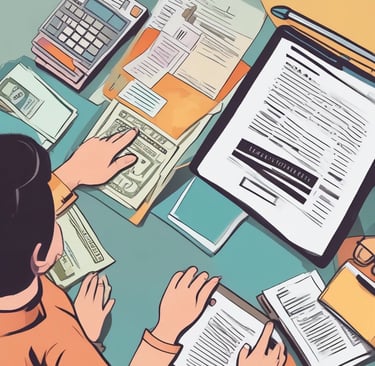
Taking care of your personal finances is an essential skill for anyone who wants peace of mind, security, and financial freedom. The problem is that many people do not know exactly where their money is going, which makes it difficult to save, build an emergency fund, and start investing.
The good news is that organizing your financial life does not require complex formulas. With a few simple and consistent adjustments, it is possible to take control of your money and build a more stable financial future.
In this article, you will learn 9 practical personal finance tips to identify expenses, save money, create your emergency fund, and take your first steps in investing.
1. Write Down All Your Expenses (Real Financial Control)
The first step to good personal financial organization is to record absolutely all expenses. Small daily costs, such as coffee, snacks, and app subscriptions, often go unnoticed and end up hurting your budget at the end of the month.
Use a spreadsheet, an app, or a notebook. The format does not matter. What matters is clarity.
2. Separate Fixed Expenses and Variable Expenses
To better understand your personal finances, divide your expenses into two categories:
Fixed expenses: rent, basic bills, internet, transportation
Variable expenses: leisure, shopping, delivery, entertainment
This separation helps you identify where it is possible to cut excess spending without affecting essentials.
3. Identify Emotional Spending and Impulse Purchases
A large part of financial problems is linked to behavior. Purchases made due to anxiety, stress, or impulse undermine any plan.
Before spending, pause and reflect. This simple habit greatly improves expense control.
4. Set a Monthly Limit for Personal Spending
Setting a monthly limit for personal expenses helps maintain a balance between quality of life and financial responsibility.
When there is a clear limit, you start spending better, not less.
5. Pay Yourself First (How to Save Money)
One of the most important rules of personal finance is to set aside part of your income for savings before paying bills or consuming.
Even if it is 5% or 10%, the habit of saving builds financial discipline and a long-term mindset.
6. Build Your Emergency Fund
An emergency fund is essential to avoid debt in unexpected situations, such as unemployment or health issues.
Ideally, you should save 3 to 6 months of your living expenses, in safe investments with daily liquidity.
Without an emergency fund, any unexpected event becomes a financial crisis.
7. Eliminate Debt Before Investing
Before thinking about investing, it is essential to organize your debts, especially those with high interest rates, such as credit cards and overdrafts.
Paying off expensive debt is one of the smartest financial decisions you can make.
8. How to Start Investing in a Simple Way
Many people postpone investing because they believe it is complicated. It is not.
Start with simple and safe investments, especially fixed income, while you learn more about the financial market.
Time is one of the greatest allies of investing.
9. Invest in Financial Education
No investment is more important than knowledge. The more you learn about personal finance, the fewer mistakes you make and the more opportunities you see.
Financial education is protection, not a cost.
Conclusion: Personal Finances Are Built Day by Day
Organizing your personal finances is not about earning more money, but about making better choices with what you already earn. By controlling expenses, learning how to save money, building an emergency fund, and starting to invest, you create financial security in a sustainable way.
Small decisions, repeated daily, create great results in the long term. Start today. Your financial future begins now.